













Consulting
Practical advice for everything around your production system.
Our teams plan, program, simulate and commission production systems every day. Consulting is how we share that experience with you — from the first concept to the modernization of an existing plant.
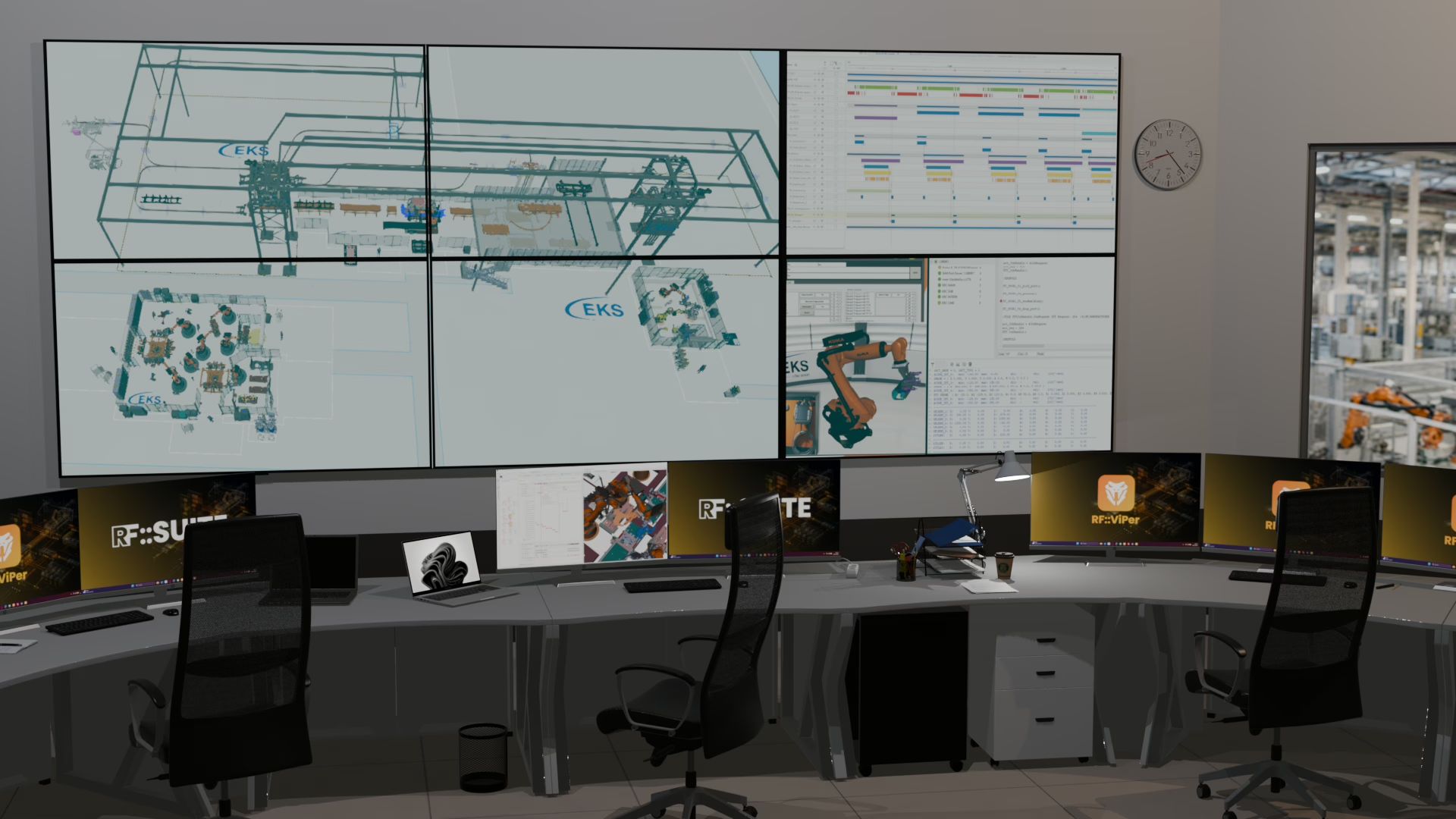
We advise on the work we do ourselves.
Our consulting does not come from a separate department that only writes concepts. It comes from the same people who build control software, create digital twins, stand next to the line during ramp-up and develop the tools that support this work.
That is why our advice tends to be concrete. We know which ideas hold up on the shop floor, where projects usually lose time and which effort pays off. You get an outside view from people who know the inside of a production system.
Engineering and programming
PLC and robot projects on common automation platforms, from single cells to connected lines.
Simulation and virtual commissioning
Digital twins, virtual testing of control software and the RF::SUITE tools we develop for it.
Commissioning and ramp-up
On-site work under real time pressure, where plans meet physical equipment.
Industrial software and data
Tools, interfaces and analysis of production records from real and virtual systems.
Training and qualification
Teaching engineers and operators — which forces us to explain things clearly.
Support for every stage of a production system's life.
Most questions are tied to a specific project phase. Choose a phase to see what we typically advise on and what you can expect to take away.
Set the right course before the first line of code.
Decisions made early determine effort, risk and flexibility later. We help you check concepts against practical experience while changes are still cheap.
- Review of automation and process concepts
- Feasibility of simulation and virtual commissioning
- Requirement specifications for suppliers
- Effort and risk estimates for digital methods
What you take away. A clear view of which methods make sense for this project, and a specification your suppliers can work against.
Engineering that fits together across teams and suppliers.
When several parties work on one system, consistency becomes the real challenge. We help define the structures that keep software, signals and interfaces compatible.
- Control architecture and software structure
- PLC and robot programming standards
- Signal lists, naming and interface definitions
- Coordination between integrators and suppliers
What you take away. Agreed rules and structures that reduce integration effort and make software easier to maintain.
Test what matters, at the depth that makes sense.
Virtual testing can be scaled from a single function to a complete line. We help you decide what to model, how to connect controllers and which tests deliver the most value.
- Virtual commissioning strategy and scope
- Model depth and data requirements
- Hardware- or software-in-the-loop setup
- Test scenarios and acceptance criteria
What you take away. A test concept sized to your project, including an honest view of where the effort does not pay off.
Keep commissioning and ramp-up under control.
This is where schedules come under pressure. We help structure the work on site, make open issues visible and find out why a system does not yet reach its targets.
- Commissioning planning and sequencing
- Issue tracking and prioritization
- Cycle-time and bottleneck analysis
- Restart and recovery concepts
What you take away. A shared picture of where the system stands and which measures move ramp-up forward.
Understand how the running plant really behaves.
Once production runs, questions shift to stability, availability and continuous improvement. We help you collect the right data and turn observations into reliable conclusions.
- Monitoring and data concepts
- Downtime and deviation analysis
- Optimization of sequences and timing
- Retaining knowledge beyond the project team
What you take away. Traceable findings about plant behavior and a prioritized list of improvements.
Change existing systems without disrupting production.
Brownfield projects come with limited downtime and incomplete documentation. We help you assess the current state and plan changes that can be introduced safely.
- Assessment of existing automation
- Migration strategies for control systems
- Virtual testing of planned changes
- Step-by-step rollout planning
What you take away. A realistic modernization path with known risks and a plan for short shutdown windows.
Topics we are regularly asked about.
Some questions are strategic, others are very technical. Both are welcome.
Automation concepts and architecture
Structure of control systems, distribution of functions and interfaces between machines and lines.
PLC and robot programming standards
Guidelines, templates and libraries that keep software consistent across projects and suppliers.
Simulation and digital twins
Which model is needed for which question, and how it stays useful beyond a single project.
Introducing virtual commissioning
First pilot, required data, team roles and how the method fits into existing processes.
Specifications and supplier coordination
Requirements that are clear enough to deliver against and to check at acceptance.
Commissioning and ramp-up
Planning, prioritization and analysis when time on site is limited.
Production data and monitoring
Which signals to record, how to structure them and how to draw reliable conclusions.
Software tools and IT/OT interfaces
Tool selection, integration and connecting shop-floor data with higher-level systems.
Qualification and knowledge transfer
Building internal expertise so your team can carry methods forward independently.
How we approach consulting.
Good advice is useful advice. These principles guide every engagement, regardless of size.
Listen first
We start with your situation, your constraints and your goals — not with a prepared method.
Honest assessment
Including when something is not worth the effort, or when our own tools are not the right fit.
Recommendations you can act on
Concrete, prioritized and sized to the team and budget you actually have.
Knowledge stays with you
Findings are documented so your team can continue without depending on us.
Formats that fit the size of the question.
Not every topic needs a project. Many start with a single conversation and grow only if it makes sense.
Initial conversation
You describe your situation, we ask questions and give a first assessment. Often this is enough to decide on the next step.
Workshop
A structured session with your team on one topic, such as a test strategy, a programming standard or a ramp-up problem.
Assessment and review
We look at concepts, software, models or plant data and summarize strengths, risks and recommended measures.
Concept work
Together with your team, we develop architectures, specifications, standards or test concepts ready for implementation.
Project accompaniment
We support a project over several phases as a sparring partner, reviewer or technical second opinion.
Expert support on demand
Direct access to specialists when a specific technical question comes up and needs a fast answer.
From the first question to a clear next step.
Every engagement follows the same simple sequence, whether it takes an afternoon or several months.
Talk
You explain the question and the context. We clarify what a useful answer would look like.
Understand
We look at documents, software, models or the plant itself and talk to the people involved.
Assess
We evaluate options against your goals, constraints and practical experience from similar situations.
Recommend
You receive concrete, prioritized recommendations with the reasoning behind them.
Support
If you want, we accompany implementation. If not, the documentation lets your team continue alone.
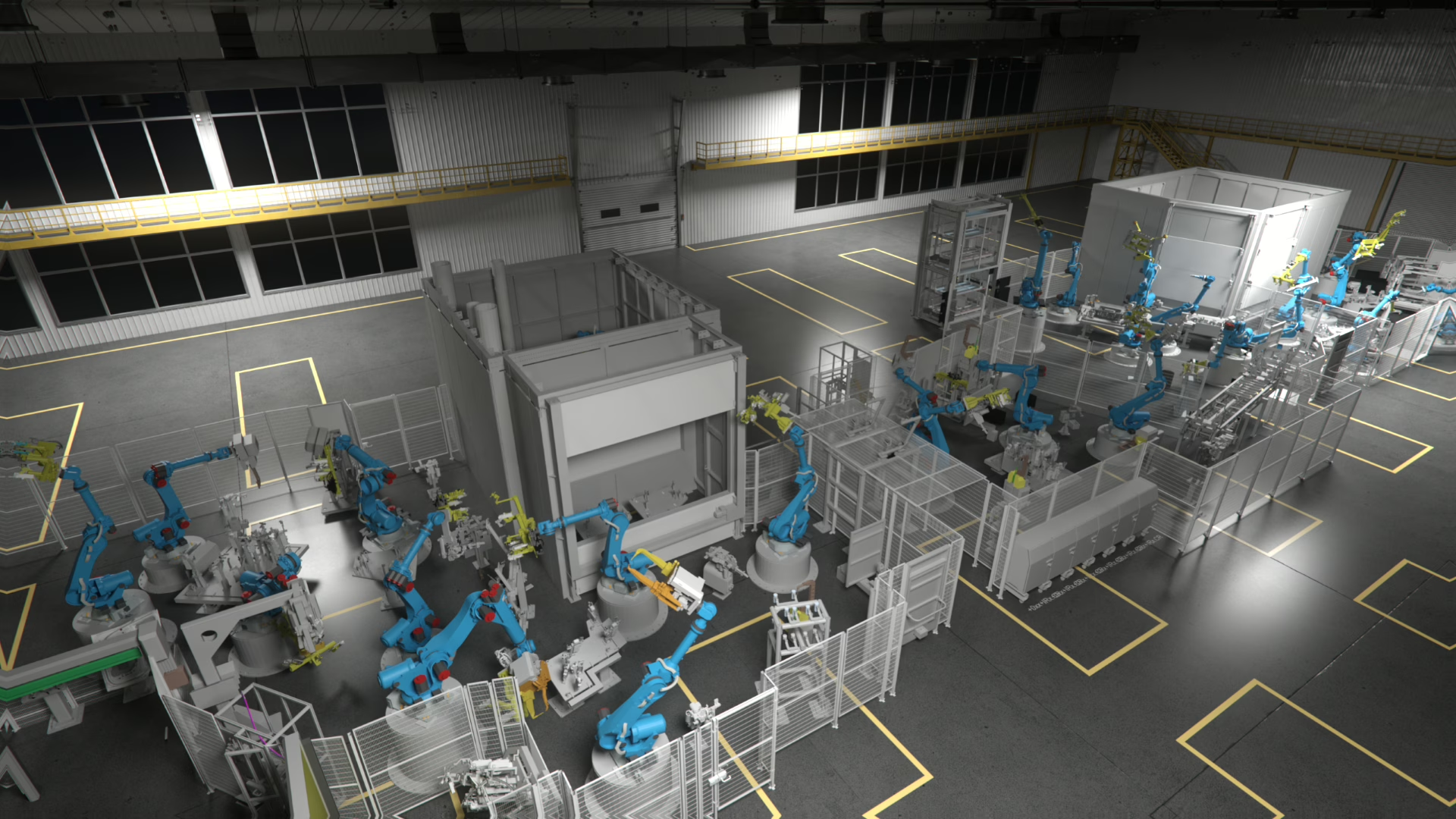
A shared model, a recording or a signal list often says more than a long meeting. We like to work directly on your material.
Questions we help teams answer.
A few examples from recent conversations. If your question is not on the list, that is fine.
Is virtual commissioning worth it for our next project?
Depends on complexity, schedule and available data. We help you weigh effort against expected benefit.
How do we bring several suppliers onto one software standard?
Define shared rules, templates and acceptance checks that suppliers can actually follow.
Why does our ramp-up take longer than planned?
Look at timing, open issues and recurring stops to find where the time actually goes.
Which data do we need to understand our plant?
Start from the questions you want answered, then select the signals and records that support them.
How detailed does our digital twin need to be?
Match model depth to the tests and decisions it has to support, not to what is technically possible.
Can we modernize the control system during short shutdowns?
Plan migration in stages and test changes virtually before the shutdown window opens.
How do we write a specification that suppliers can deliver against?
Make requirements concrete, testable and consistent with your internal standards.
How do we keep project knowledge when the team changes?
Document decisions, models and criteria so they remain usable for maintenance and future projects.
Who we usually work with.
Plant and production management
Decisions on investments, methods and priorities with a technical foundation.
Planning and project management
Schedules, risks and coordination across disciplines and suppliers.
Automation and controls engineering
Architecture, standards, programming and testing questions in detail.
Commissioning teams
Structure and analysis when a system has to reach its targets on site.
Maintenance and operations
Stability, diagnostics and knowledge about systems already in production.
Machine builders and integrators
A second opinion on concepts, methods and customer requirements.
When advice turns into implementation.
Consulting often leads into one of these services — but it does not have to.
Good to know before we talk.
Do we have to use RF::SUITE to work with you?
Can consulting be a single workshop or conversation?
Do you work alongside our existing suppliers and integrators?
What should we prepare for the first conversation?
Do you work on site or remotely?
Can you also support the implementation afterwards?
Tell us what you are working on.
Whether it is an early concept, a difficult ramp-up or a plant that needs to change, a first conversation helps clarify what kind of support makes sense.